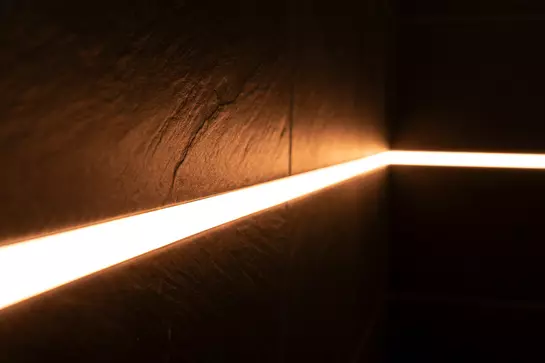
Which LED light profile is the right one for your project?
Let us know your design idea, where you want to use it and the lighting effect you want to achieve – we will be happy to advise you in planning your lighting and choosing the right profiles!

Switch on the lights first, then soak in the bathtub: Modern lighting concepts highlight the bathtub as a wellness oasis and instil a sense of relaxation even before you set foot in the warm water.
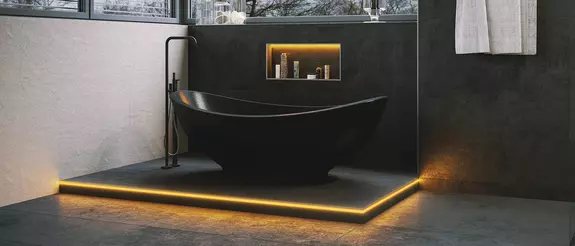
The bathtub: Your very own personal space for relaxation and regeneration, and a conscious escape from everyday life. Long before we immerse ourselves in steaming water and soothing fragrances, harmonious lighting effects can envelop us with a sense of relaxation and serenity. Modern LED lighting, in particular, opens up countless different ways of showcasing your bathtub and subtly adding to your sense of well-being.
Lighting effects and illumination have an effect on our emotional wellbeing and our biological processes. In interior design, however, they have long since moved beyond being purely decorative to becoming the centrepiece of the entire design. An abstract architectural material in a manner of speaking. When planning a bathroom, focussing predominantly on tiles and fittings means missing out on a significant opportunity of creating an overall sense of well-being. The functional morning light, with its cool colour temperature, prevents the emotional release we seek in a hot bath in the evening. Only when it is enhanced by accent lighting that plays with shadows, colours and indirect light sources is the bathtub transformed from a piece of bathroom furniture into a private wellness oasis.
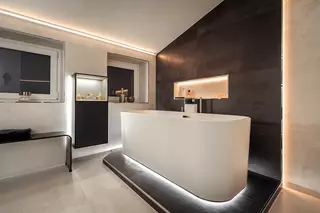
To highlight your bathtub as the focal point of the bathroom, draw the eye to it using indirect wall lighting and dramatic floating effects.
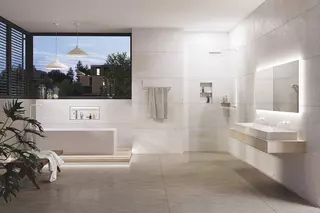
The primary functional lighting can be complemented in the bathtub area by atmospheric lighting accents in the form of niche and base lighting, which can be controlled independently.
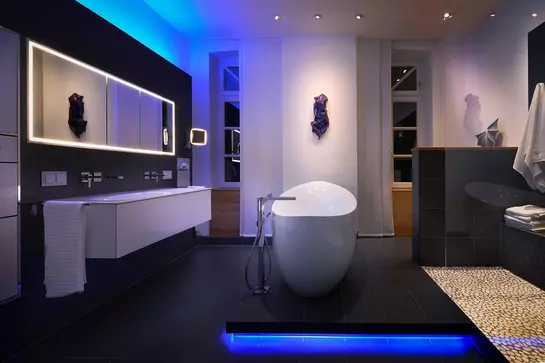
Modern LED illuminated profiles cast indirect mood lighting on ceilings, floors or walls. They can be smoothly controlled across the entire colour spectrum and playfully immerse the room in the selected colour temperature.
How can the bathtub be transformed from a functional object into the atmospheric highlight of the bathroom? What are the possible ways of using light to enhance the bathing ritual, transforming it into a complete wellness experience that relaxes not just the body but also the soul? In short: quite a few. And all of them are creative, atmospheric and special. Modern LED illuminated profiles such as Schlüter-LIPROTEC, which are integrated directly into the tile covering, are perfect for adding visual accents to the area around the bathtub. Three popular options are presented in more detail here:
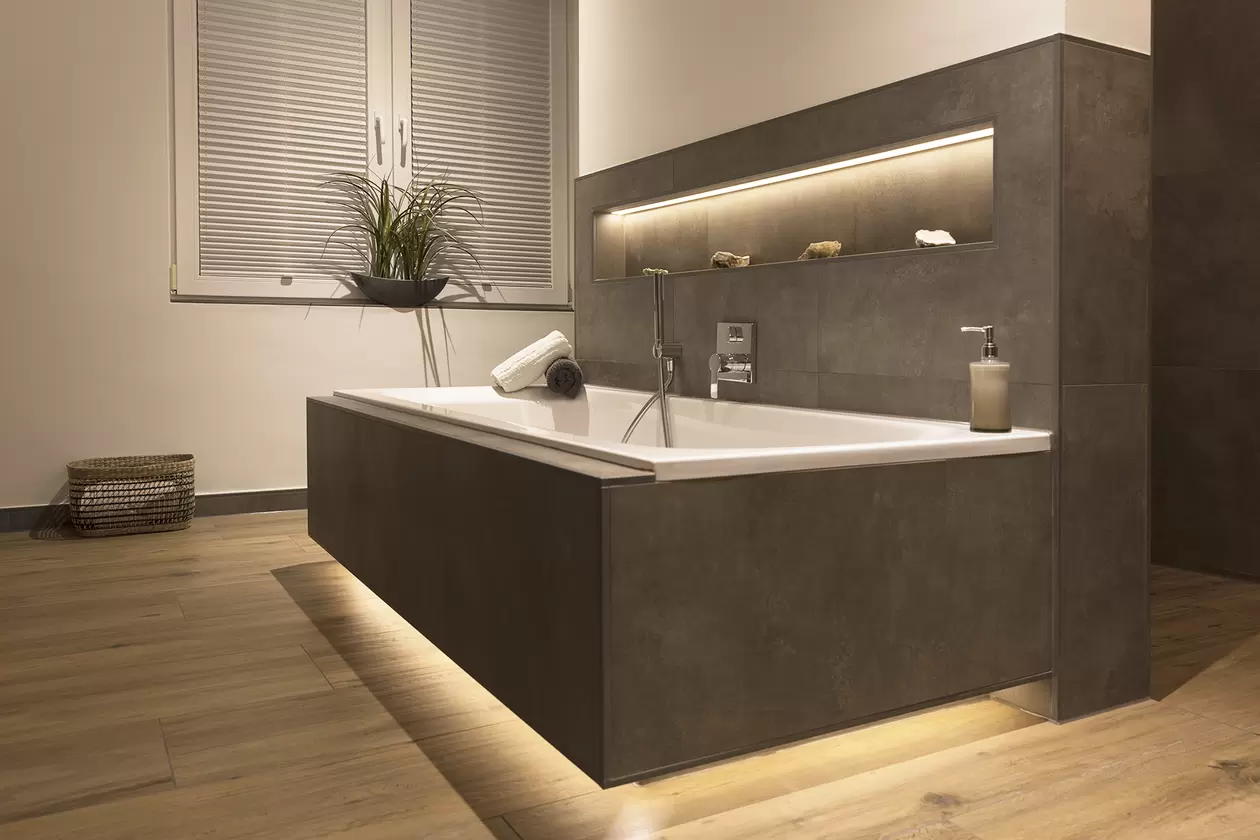
A solid bathtub that appears truly weightless: The integration of light strips below the bathtub creates a visual separation between the bathtub and the floor. From a purely visual perspective, this creates an impressive effect where the large bathroom object suddenly appears to float elegantly. This effect becomes more pronounced the further the light edge is recessed and the more the bathtub surround is separated from the base by the light curtain.
This type of installation creates a challenging dramatic effect within the space and merges two seemingly contrasting elements: the physical size of the bathtub with the visual delicacy of the light. There is something captivating about the way light and shade interact to turn a static tub into a dynamic piece of art. The indirect light on the floor gently illuminates the room without spoiling the ambience – and is also much appreciated as comfortable orientation lighting at night.
Depending on the type of base, LIPROTEC-WS, LIPROTEC-LLPM or LIPROTEC-LLP, among others, can be used for illuminating the base at the foot of the bathtub.
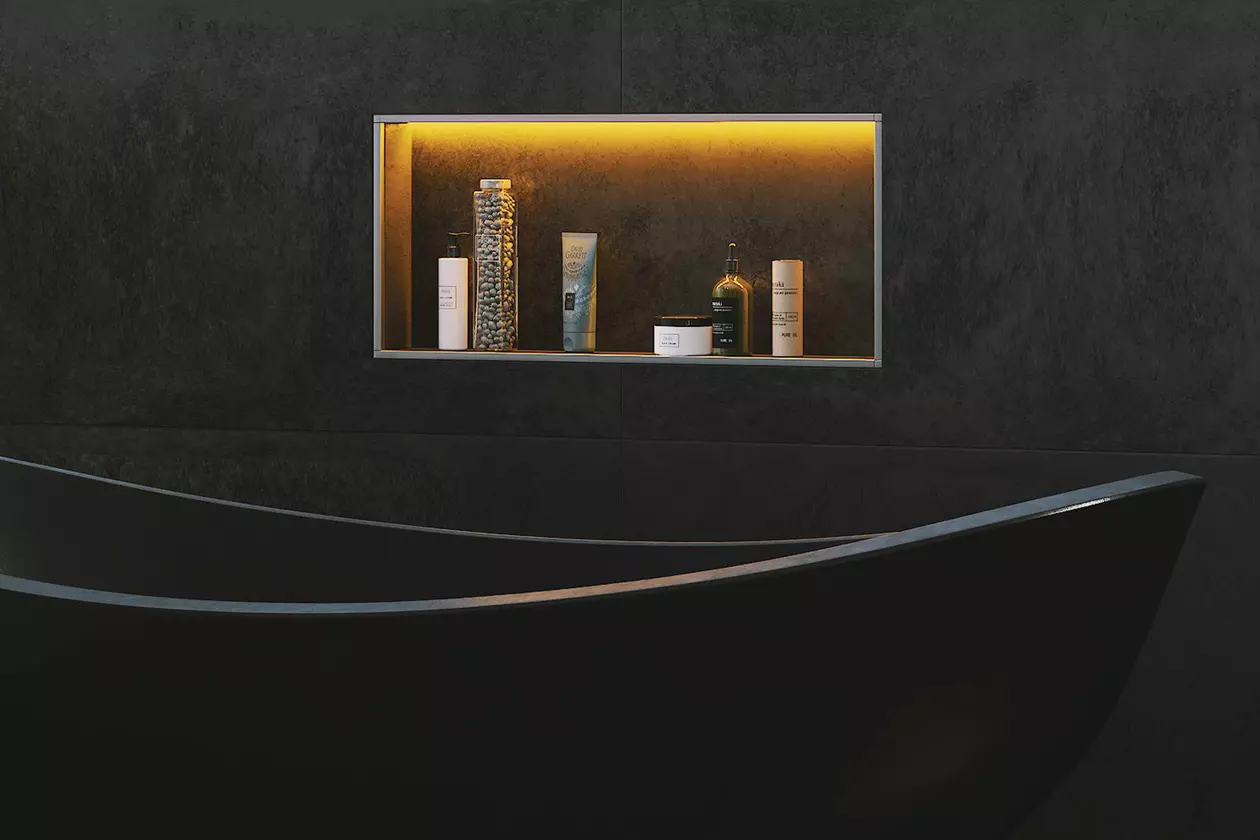
Wall niches are inherently functional and versatile in terms of storage space, comfort and design, but they are even more visually appealing when illuminated. Acting as an indirect light feature above the bathtub, not only do the shelves provide storage, they also serve to present accessories and toiletries in an attractive way. The practical recess in the wall becomes an illuminated stage that brings visual structure to the room, bathes it in colour or accentuates the textured surface of the tiles.
Depending on personal preferences, the LED illuminated profile can be installed at the front, in the middle or at the rear of the niche. The indirect form of lighting creates a sense of depth in the space and underscores its tranquil, elegant characteristics. That's why it's no surprise that this stylish lighting effect is frequently combined with other lighting options and matching colours.
Prefabricated complete kits, such as Schlüter-LIPROTEC-NLT, are extremely easy to install. The scope of delivery includes both the niche prepared from KERDI-BOARD in the required size and the matching LIPROTEC LED technology in a convenient plug-and-play design.
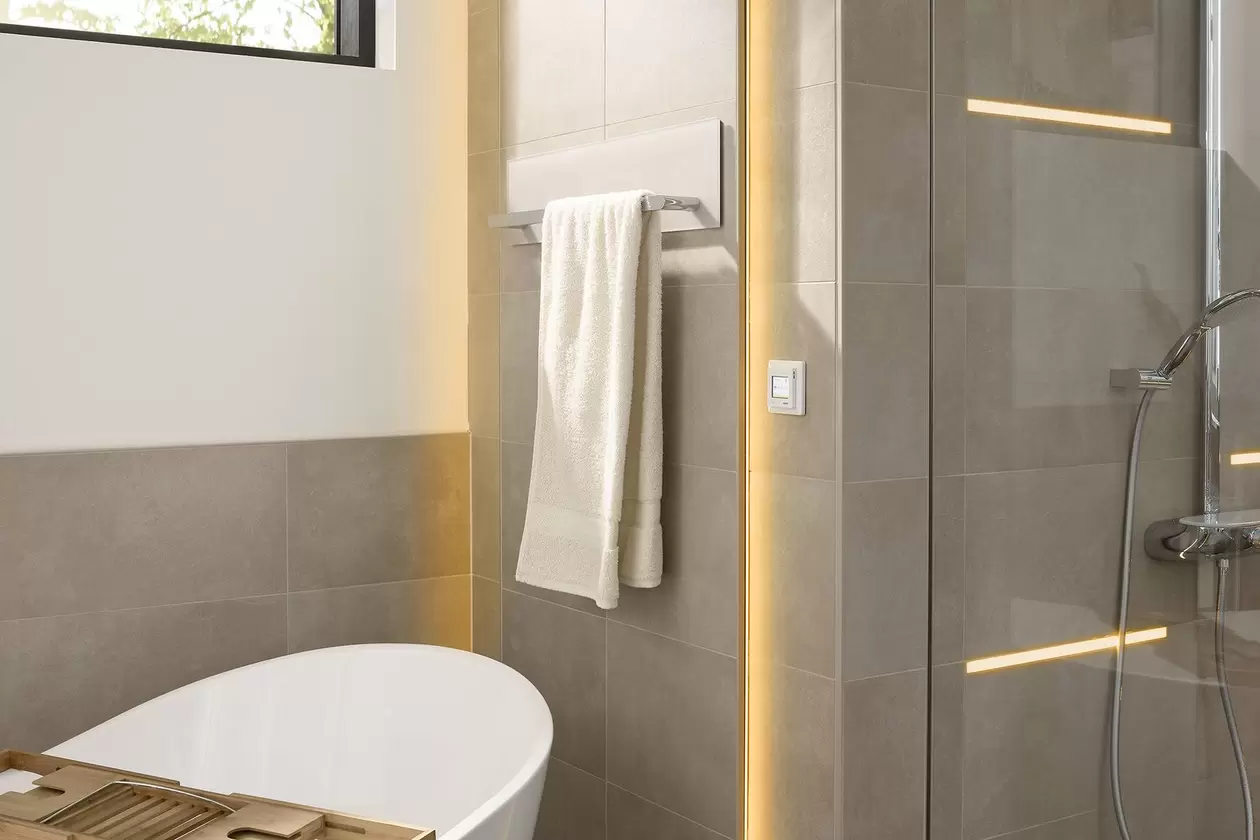
Flush-mounted LED profiles are superb for installing specific lines of light along edges or transitions to accentuate the geometry of a space, to highlight shapes and objects or to add subtle focal points. They are installed within the tile covering and can be used as a direct or indirect light source.
Typical applications include flush-mounted installations for shower fixtures or towel holders that create a sense of depth while providing pleasant indirect lighting. But they can also be used as visual elements in walls or floors to accentuate individual functional areas such as the bathtub, for instance. Accents with lines of light help guide the eye and – depending on the chosen colour temperature – either ensure an inviting atmosphere or provide more brightness in the bathroom.
When choosing the most suitable lighting profile, the installation situation is critical, because different technical specifications are required for indirect cove lighting above the bathtub than for step, wall or surface-mounted installations. Our interactive diagram helps you find the most suitable LIPROTEC profiles for your design ideas.
High quality light: Depending on the installation situation, they deliver evenly distributed, indirect light that is pleasantly non-glare.
Flexible application scenarios: They can be precisely installed in niches, along edges or into baseboards, making them extremely versatile.
Free choice of colour: They can be regulated as regards colour temperature and brightness, making them suitable for both functional as well as decorative lighting.
Low-profile design: They can be installed virtually invisibly in the tile covering and this creates a particularly high-quality, restful overall impression.
Water and electricity are a potentially dangerous combination that can pose a considerable risk if not properly installed. The overriding priority is to protect the user from electric shock by preventing the two components from coming into contact with one another. In Germany, the basic planning standard is DIN VDE 0100-701, which also defines protection zones in the bathroom that differ in terms of the volume of water and, with that, the IP protection rating.
The wall surfaces above bathtubs up to a height of 2.25 m are classified as Protection Zone 1, whereas adjacent surfaces up to a distance of 60 cm are classified as Protection Zone 2. Lighting fixtures in both zones must have a protection rating of at least IPX4 and are therefore protected against splashing water. If harsher conditions can be expected, such as from water jets, massage jets or cleaning processes, protection class IPX5 is required.
For lighting in the immediate vicinity of the bathtub, always choose systems with a rating of at least IP65 or higher.
Have the installation carried out by a qualified craftsman to ensure that no moisture can penetrate either the profiles or the connection areas.
This is not just essential for technical safety, but also means that you can enjoy your illuminated bathtub for many years to come.
The variety of illuminated profiles on offer is virtually unlimited – making it difficult to keep track of them all. Before choosing one, make sure it meets the following requirements:
IP protection rating: For wet areas, we recommend IP65 or higher.
Power supply unit: The power supply unit must not be installed in a wet area but must be connected and fitted externally.
Profile length: Measure to see what length you need. Many standard profiles are too short – or cannot be cut to size.
LED technology: High-quality profiles create a seamless lighting effect without showing individual LED points.
Light colour: Modern systems can switch between cool white, warm white and coloured light.


