
Suitable covering materials for floor heating systems
Ceramic tiles, natural stone, parquet, carpeting or laminate? Find out which covering materials can be used with our floor heating systems and what a perfect floor assembly looks like.

Choosing the right floor covering is one of the biggest decisions in new construction or renovation projects. Whether it’s about hygiene, healthy living or design, tiles have many excellent qualities.
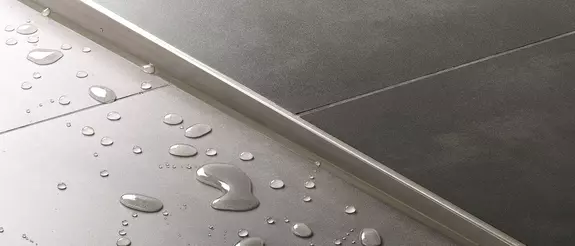
Hardly any other design element shapes the essence of a room as much as the flooring. It can last for decades and affects the look and feel of the space, its warmth and cosiness – and thus has a direct effect on our well-being. When choosing a floor covering, the classic dilemma between wood and tiles almost always plays a part. So let's take a look at the technical properties of tiles and the main reasons why they are a good solution for the whole house.

It is one of the harshest preconceptions about tiles – they are thought to be cold underfoot and uncomfortable. Anyone who thinks of tiles in winter automatically associates them with thick socks or slippers.
But why, actually? The fact is that tiles and natural stone are floor coverings with high thermal conductivity and can efficiently transfer heat into the room when combined with modern heating systems such as Schlüter-BEKOTEC-THERM. Whereas other materials tend to store heat themselves and then release it gradually, tiles transfer heat quickly and directly. In combination with a floor heating system, they can react quickly to changes in temperature and distribute the heat evenly around the room.
What is often seen as a disadvantage of tiles actually turns out to be an advantage: When used as a floor covering over a floor heating system, tiled flooring optimises the thermal conductivity, the indoor climate and distribution of the heating energy.
The thermal conductivity of a material describes its capacity for transporting thermal energy in the form of heat. It is calculated on the basis of tests and indicates how much heat flows through a layer of material with an area of 1 m² and thickness of 1 m for a temperature difference of 1 Kelvin. It is measured in W/(mK) – watts per metre and Kelvin – and also depends on the physical properties of the material, such as density, porosity and moisture content.
The lower the thermal conductivity, the better the insulating properties of the material. For comparison:
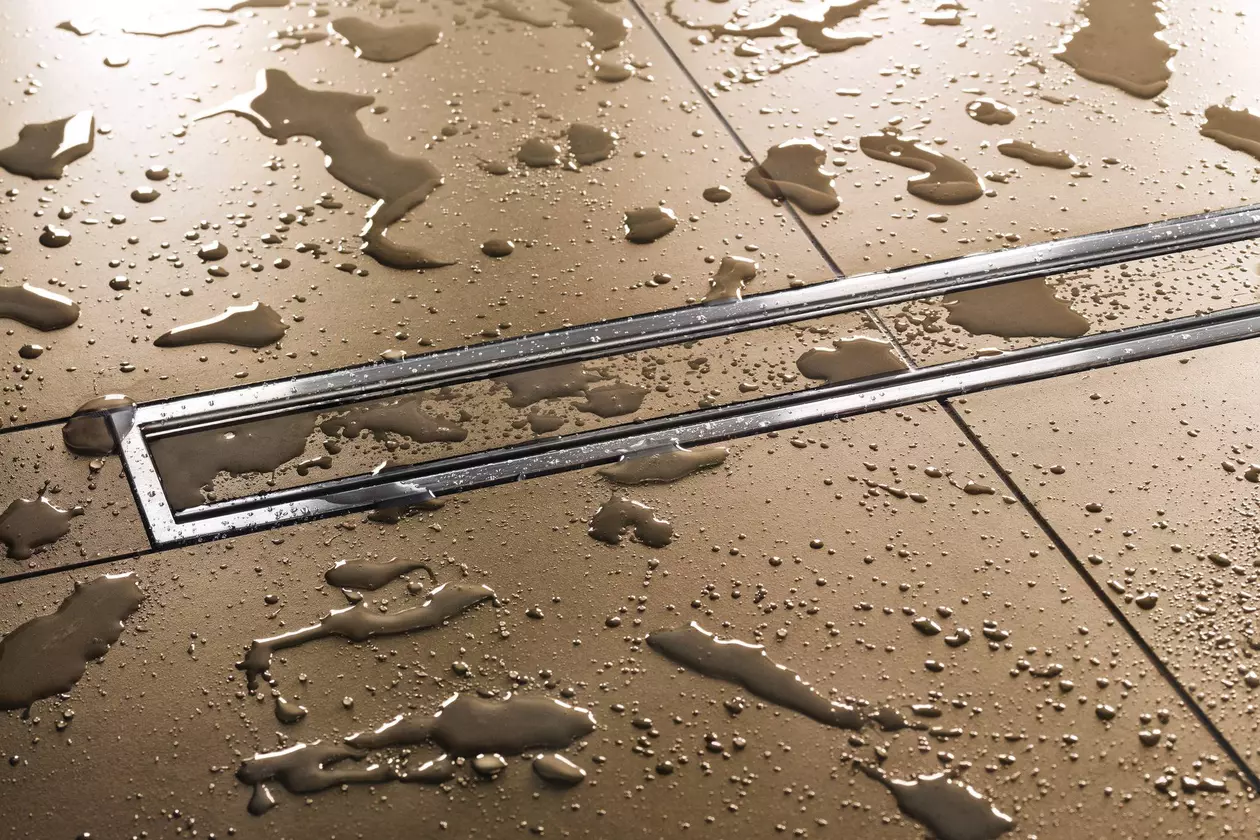
Tiles are unrivalled when it comes to hygiene and allergens: their non-porous, water-repellent structure prevents microorganisms, dust mites and mould from surviving. The reason for this is the manufacturing process, as ceramic tiles are fired at temperatures of between 850 and 1,200 degrees Celsius. This creates a dense, completely sealed surface that is really easy to clean and keep clean.
This makes ceramic surfaces extremely practical and hard-wearing: coarse dirt can simply be swept or vacuumed up, while liquids such as water, red wine or grease splashes can be wiped away with ease. These practical qualities are inextricably linked with the health benefits of tiles, since it is exactly this non-porous surface that makes them sanitary and, therefore, also contributes to a healthy living environment. A tiled floor therefore becomes the ideal choice, especially for sensitive individuals and anyone with allergies.
Laminate, parquet or wooden flooring is often regarded as a purely natural product and associated with a healthier indoor environment. Maybe that's true of high-quality solid wood – laminate, however, is a man-made composite material which is made up of several bonded layers and a melamine resin surface.
Tiles, in contrast, are made from a mixture of natural materials such as clay, feldspar, sand and quartz. It is free from any plastics, solvents or plasticisers and does not produce fumes. Even heat cannot damage the tile. It does not burn and does not generate any toxic fumes, even when placed directly in an open fire. Thanks to its non-porous surface, it is also effortless to keep clean and helps protect against dust mites and mould.
This means that tiles and natural stone pose absolutely no environmental or health risks – quite the contrary: From day one, they create a lasting, pollution-free and healthy indoor climate.
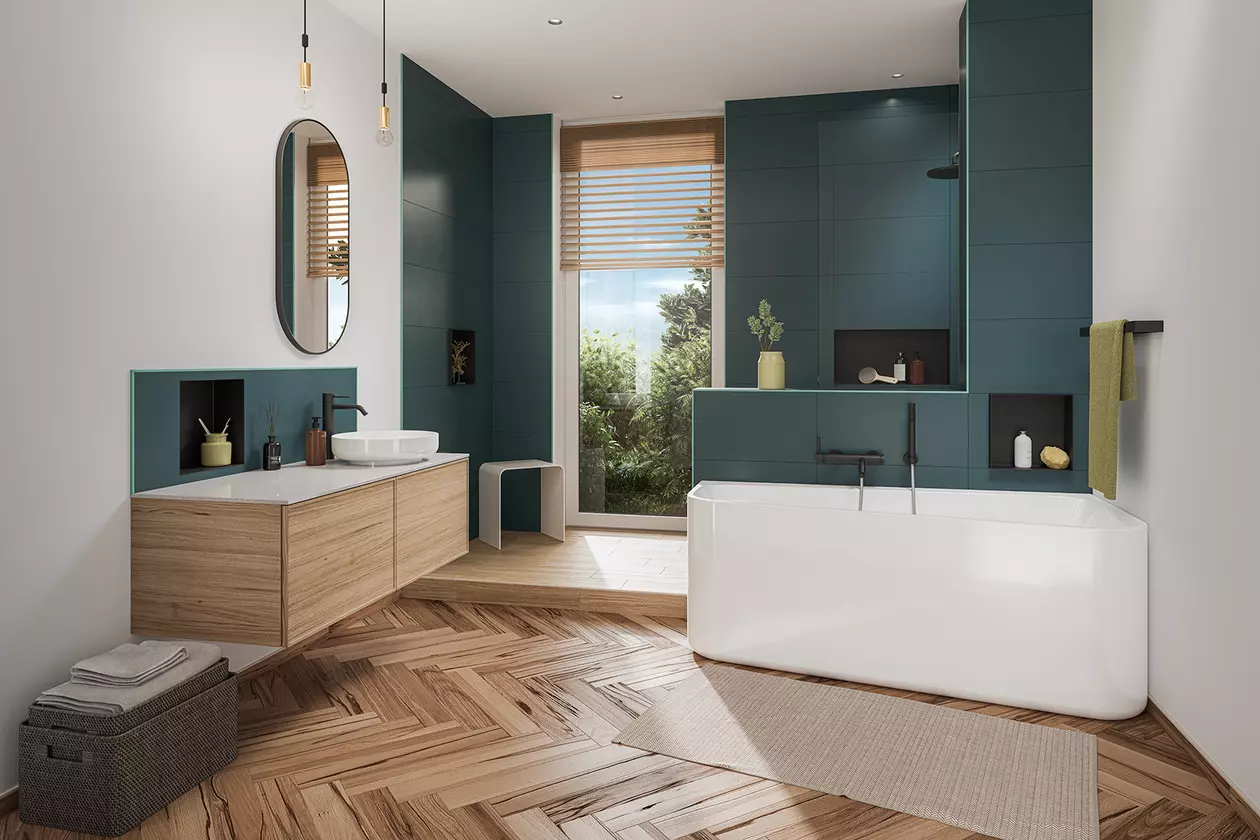
Choosing flooring is, of course, a classic dilemma: your heart longs for the warm feel of real wood, whereas your head craves a tiled floor that is easy to keep clean. But is it really still necessary to choose between aesthetics and functionality these days? The answer is quite simply: No. In fact, over the last few years, tiles have been developed to such an extent in terms of colour, texture and finish that they are now difficult to distinguish from other floorings such as wood or concrete.
Imagine the warm, cosy feel of wooden floorboards in your kitchen – but with the knowledge that neither a spilled glass of red wine nor a mishap with grease splashes will leave a lasting reminder. This is not a Utopian fantasy, but the reality of modern wood-effect tiles. They combine the best of both worlds: the authentic look and texture of wood with the unmatched durability and sanitary properties of ceramic. Whether in the kitchen or the bathroom: Tiles make it possible to achieve the cosy, warm look of real wood nowadays even in areas, in which it would be a totally unsuitable choice for functional reasons.
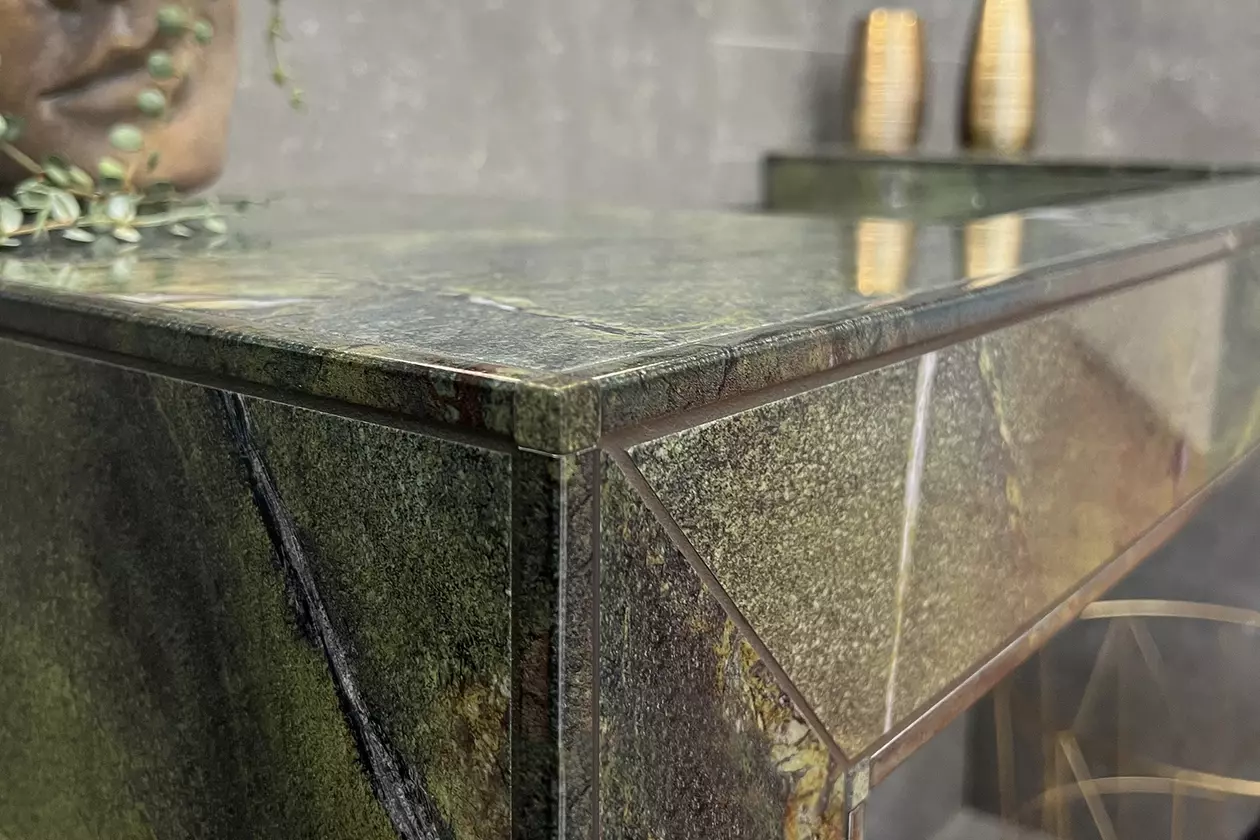
Custom design down to the last detail: MyDesign by Schlüter-Systems makes it possible to perfectly match complementary components, such as profiles or skirting boards, to the design of the tile. In addition to the coating in a matching RAL colour, enhancement by means of digital printing is also possible. This allows custom tile finishes – such as a wood grain, a concrete look or coloured marbling – to be applied directly to the complementary component. The result is a seamless transition and the complete colour integration of complementary components into the flooring design concept.
Anyone who wants to minimise their environmental footprint will find that tiles and natural stone present an interesting option. The study "Life cycle assessment of indoor floor coverings” (2018) by the German Natural Stone Association (DNV) shows that tiles and natural stone have a lower global warming potential (GWP) than many alternatives. The research considers the environmental impacts from manufacturing to disposal and is aimed primarily at architects and designers who would like to make future-oriented decisions when choosing indoor floor coverings.
Tiles and glazes consist mainly of mineral raw materials, which can usually be recycled through various processes. They are actually just fired clay and are manufactured using processes involving mixing, pressing and firing. This does require water, electricity and thermal energy, but unlike wood, does not involve long transport routes, problematic monocultures or illegal logging.
The most important advantage of tiles is their exceptional durability. Whereas other floor coverings need to be replaced or resurfaced regularly, tiles are virtually resistant to wear and retain their attractive appearance even in heavily used areas. According to the environmental product declaration of the German Ceramic Tile Association, their usual service life is 50 to 150 years – and, in the case of the material itself, even longer. Even though preferences and interior design trends change, good-quality tiles can easily last for decades. This durability means less frequent refurbishments, thus contributing to long-term use.
Plus: When combined with modern floor heating systems, a tiled floor reacts quickly to changes in temperature and distributes the heat evenly throughout the room – a practical advantage for many living and working areas where it has been installed.
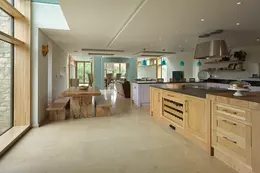
This spacious living and dining area has been tiled throughout with large-format tiles in a sandstone effect, blending harmoniously into the design concept.
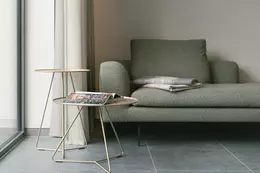
In this seating arrangement, the concrete-look tiled floor underpins the minimalist, modern interior design.
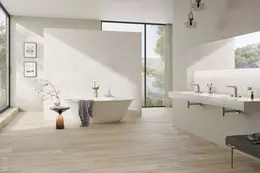
Where real wood is unsuitable, wood-effect tiles can create a cosy atmosphere without sacrificing functionality in any way.

