
Walk-in showers
Floor-level, walk-in showers with a low assembly height offer a high level of comfort, are contemporary and also designed for use by all generations. Essential for long-lasting showering enjoyment: efficient drainage.

Designing stairs to be safe not only protects yourself and your family, but also fulfils important responsibilities towards employees, customers and guests in public spaces.
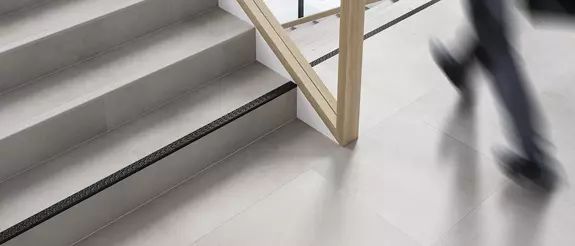
A single moment of distraction is enough: one foot lands in the wrong place, the edge of the stair is barely visible, the hand loses its grip – before you know it, there's been an accident. Accidents on the stairs are one of the most common causes of injury in everyday life, in private homes as well as in commercial buildings. Taking the right measures – from planning and lighting to the use of high-quality profiles – can make a notable difference with relatively little effort.
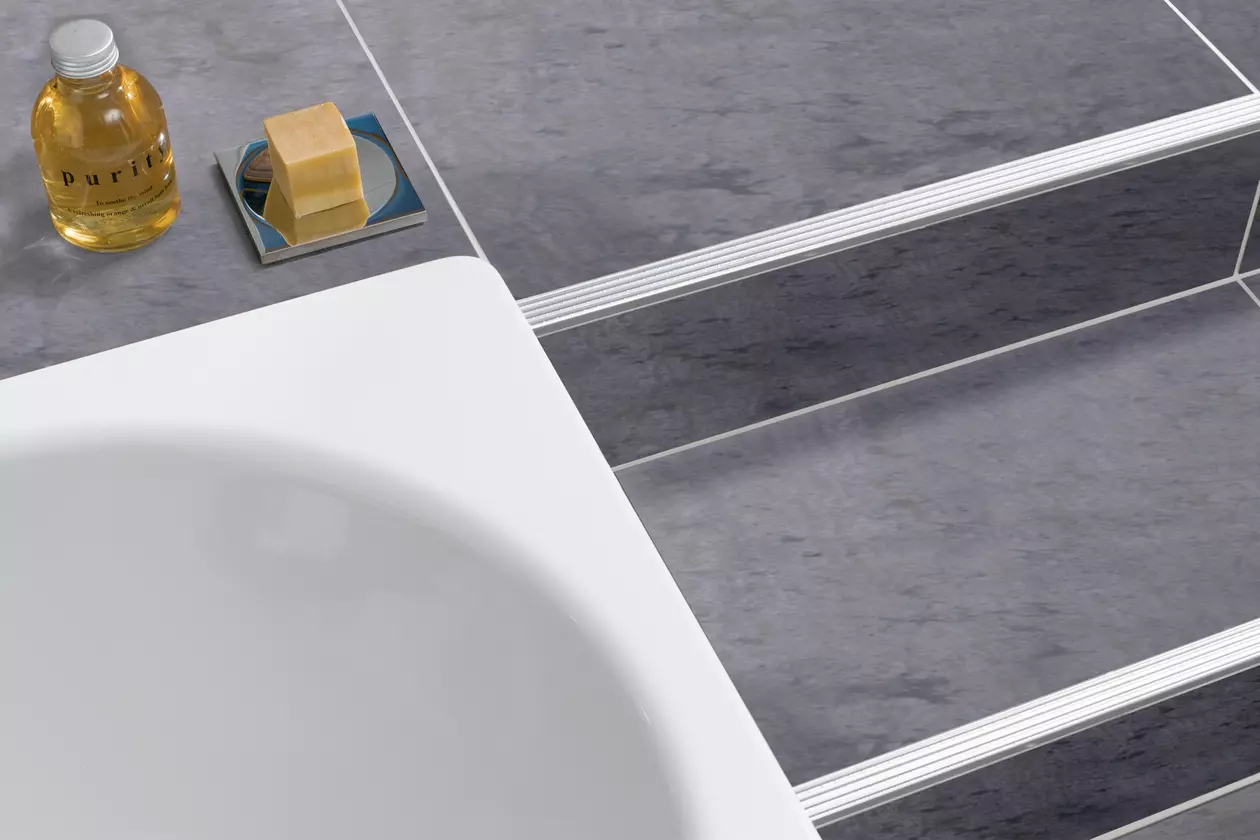
Protection and safety are the most important factors in a family home. As parents know all too well: Just a momentary distraction is enough for a child to stumble. Elderly persons, those whose mobility has been affected by an accident and persons with disabilities often feel insecure when steps are difficult to see or there is no handrail. Two factors make stairs particularly risky: To go up or down them, we have to adjust our pattern of movement – a moment prone to error. Then, as soon as something goes wrong, the second factor comes into play: the injuries that result from falls on stairs are often more serious than those from other falls.
The good news: Even simple measures can make things much safer. Equally spaced steps, glare-free lighting, full-length handrails and clearly visible edges of the stairs make all the difference. While many of these points are not legally binding in private homes, German standard DIN 18065 for stairs in buildings provides clear guidance on dimensions, proportions and safety. Taking these recommendations into account during construction or renovation will help create a safe home – and avoid costly corrective actions in the future.
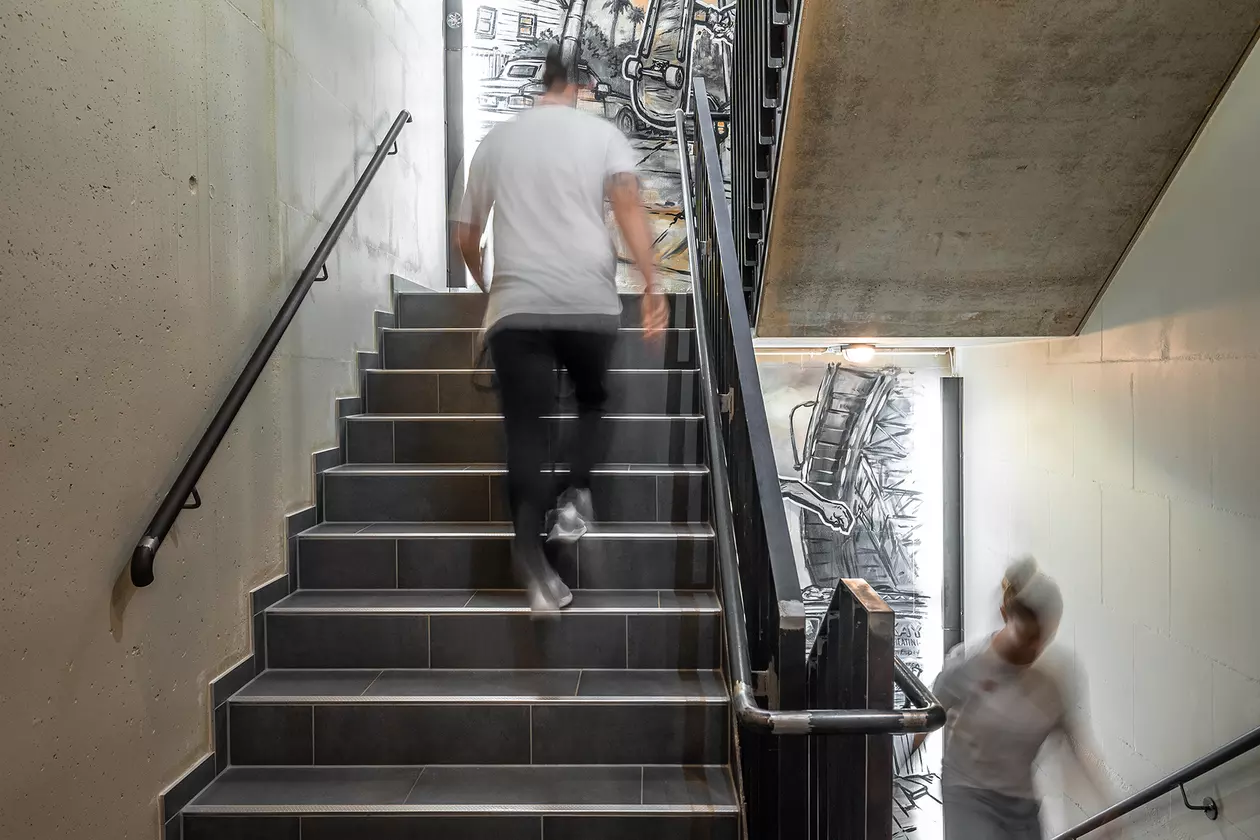
In a commercial setting, safety is not a ‘nice to have’, but an absolute essential. Simple recommendations are not sufficient here – there are clear guidelines that have to be followed. Operators of workplaces and public buildings are responsible for maintaining safe access routes and stairs. Specifically, this means evenly spaced steps, handrails on both sides, non-slip surfaces and lighting that works dependably – even in an emergency.
Implementing these standards demonstrates more than just a sense of duty. It is a clear expression of our commitment to quality, trust and respect towards our employees, guests and customers. Safe routes are not simply a legal requirement, they are also a visible sign of competence and reliability. Plus: An investment like this not only builds trust, but also reinforces the feeling of being part of a safe and supportive environment.
Each step must be immediately obvious. Contrasting edges are a great way to avoid tripping hazards. Bright, glare-free light ensures that each step is clearly visible – day and night.
Non-slip coverings are your best friend on the stairs. Especially on smooth surfaces or in wet conditions, an anti-slip coating provides a firm grip and safety with every step.
Wet or dirty steps can be treacherous. Keep the surfaces of the steps dry and clean. That also includes the handrail – only a clean handrail invites the person using it to hold on securely.
Stairs are not intended to be used as a storage space. Shoes, decorations or parcels on the steps? No, thanks! Unobstructed steps mean fewer tripping hazards and greater safety.
Haste and distraction are dangerous. Walk carefully, do not skip any steps and use the handrail. This is how to arrive relaxed and safely at your destination.
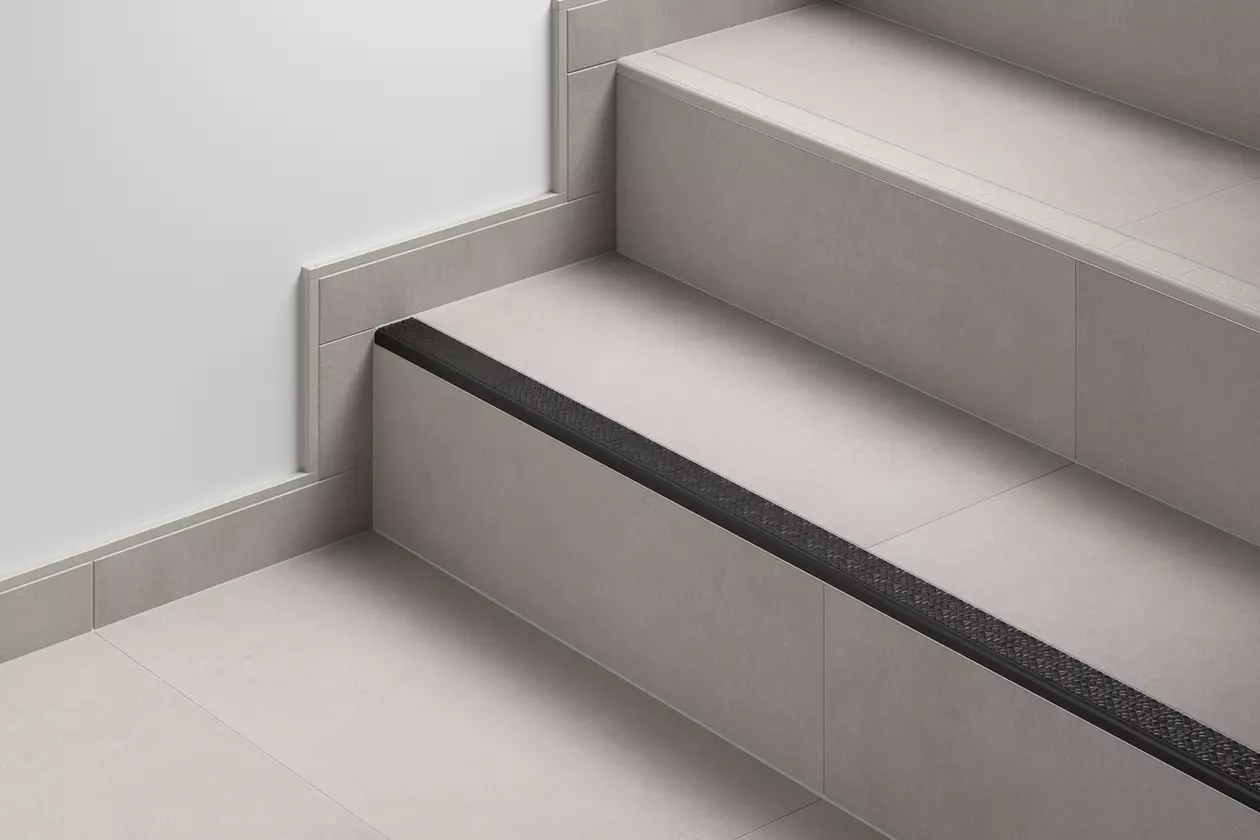
Stair nosing profiles are much more than just a visually appealing detail; they play a key role in safety because they protect the most heavily used areas of any staircase – the edges of the stairs. Without this protection, floor coverings quickly wear out, edges break off and the risk of tripping incidents increases considerably.
A clearly visible profile also reinforces the visual perception of the individual steps – this is particularly important in situations with changing light conditions or for people with impaired vision. Another advantage is the anti-slip properties offered by modern profiles with textured surfaces. Stair nosing profiles offer several advantages: They ensure safety, extend the service life of the stairs and accentuate their value at the same time.
Stairs can become a seemingly difficult obstacle – whether due to visual impairment, accident or disability from birth. Easily recognisable stair edges with a contrasting design can offer a solution that creates the foundation for consistently safe stair use.
This is exactly where Schlüter-Systems stair nosing profiles can help: They combine safety with design, provide effective protection for stair edges to wear and prolong the service life of the entire staircase. An example is the Schlüter-TREP-V made of aluminium with a replaceable slip resistant PVC tread insert. It combines the most recent developments in slip resistant products with the recommendations of currently applicable guidelines. An R 10 slip resistance rating in accordance with DIN EN 16165 enables the safe design and use of stairs and is ideal for all indoor areas not exposed to moisture.
TREP-V is available in a choice of narrow or wide versions and, with seven colours, offers an optimum contrasting effect to common tile colours. The textured tread surface acts as a tactile floor indicator and makes it easier for the visually impaired to find their way around.
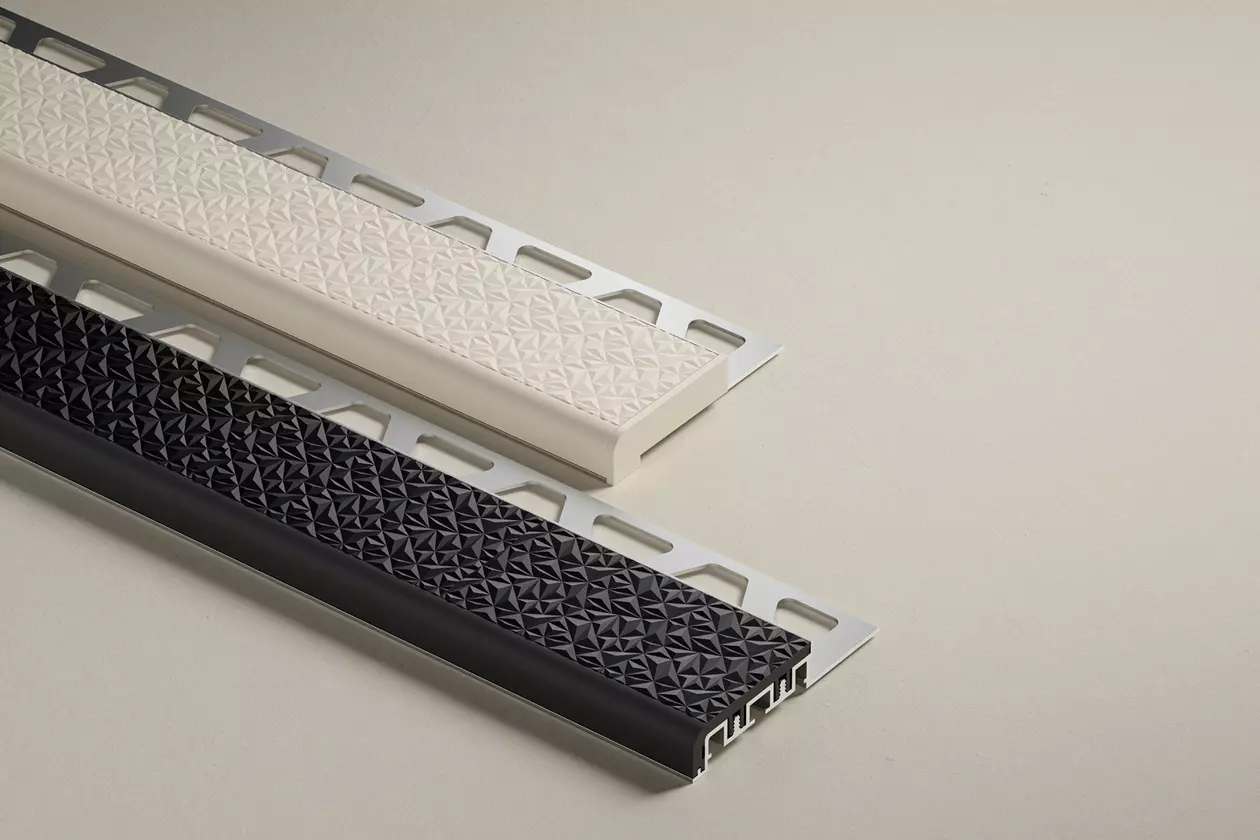
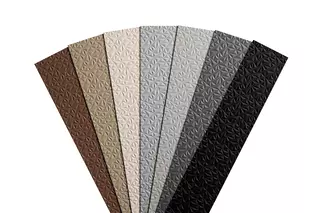
The patented profiled surface provides effective protection against falls and prevents dirt from accumulating.
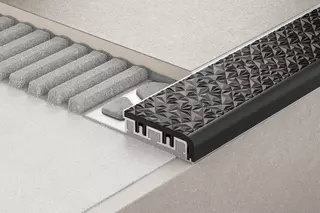
TREP-V offers greater slip resistance and is laid flush with the floor covering via the anchoring leg.
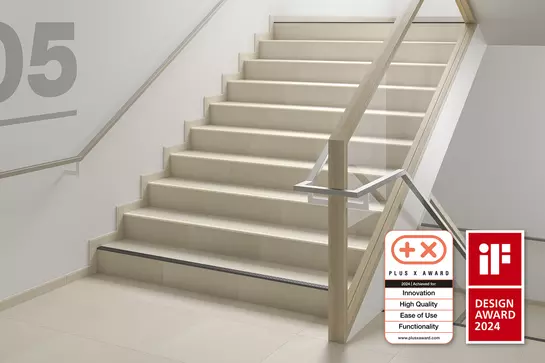
The Schlüter-TREP-V stair nosing profile has been awarded multiple times: Our innovative product has won the "Plus X Award" and the "iF Design Award".


